The first version was "cool." It was also wrong in two ways a viewer feels at once: it did not continue from where the last level ended, and its music started over in every shot. Here is how a short AI-generated video for our game's second level went through three rounds of review, what each review caught, and why keeping every version in one place made each round quick.
About the media in this post. Every image and the approved video are in the public Skyground Citadel walk-through, shared with the generation metadata stripped.
Why Make a Dream Before Building?
Our game, Skyground Citadel, began as an AI-generated video. Level 1 was built from that footage, and each playtest judged the game against the video's feel (its light, water, and atmosphere), not against a written spec. That story is in How We Turned an AI Video Into a Playable Game Level.
Level 2 had a design but no picture. The level is set inside the citadel: a great round well, open to the sky, where the hero restores the water tier by tier until it reaches the source at the top. Without a target to judge against, the art and the water would drift. So before building anything we made a "dream": a reference sheet, a keyframe for each of the five acts, and a short playthrough video made from those keyframes.
How the dream was made
The first version took an evening and very little money:
- Three candidate sheets from gpt-image-2.5, prompted from the written design. We chose the one whose labels and layout followed Level 1's sheet, rejected one that had invented its own slogans, and kept the third for its before-and-after framing.
- Five act keyframes, each made with the chosen sheet as a reference image so the hero stayed consistent.
- Ten short clips with LTX-2.3, two takes per act, then a 29 second cut using the best take of each.
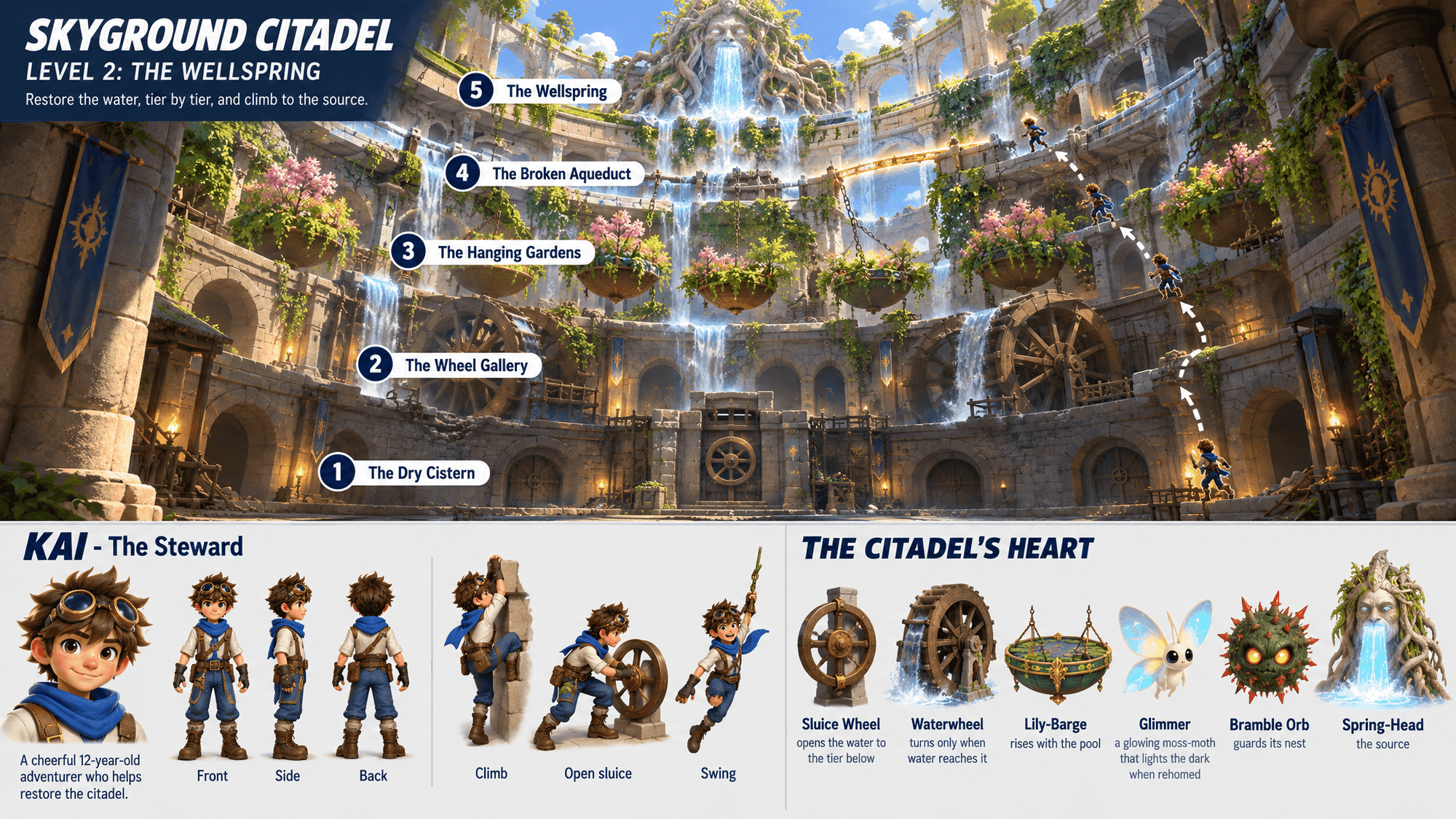
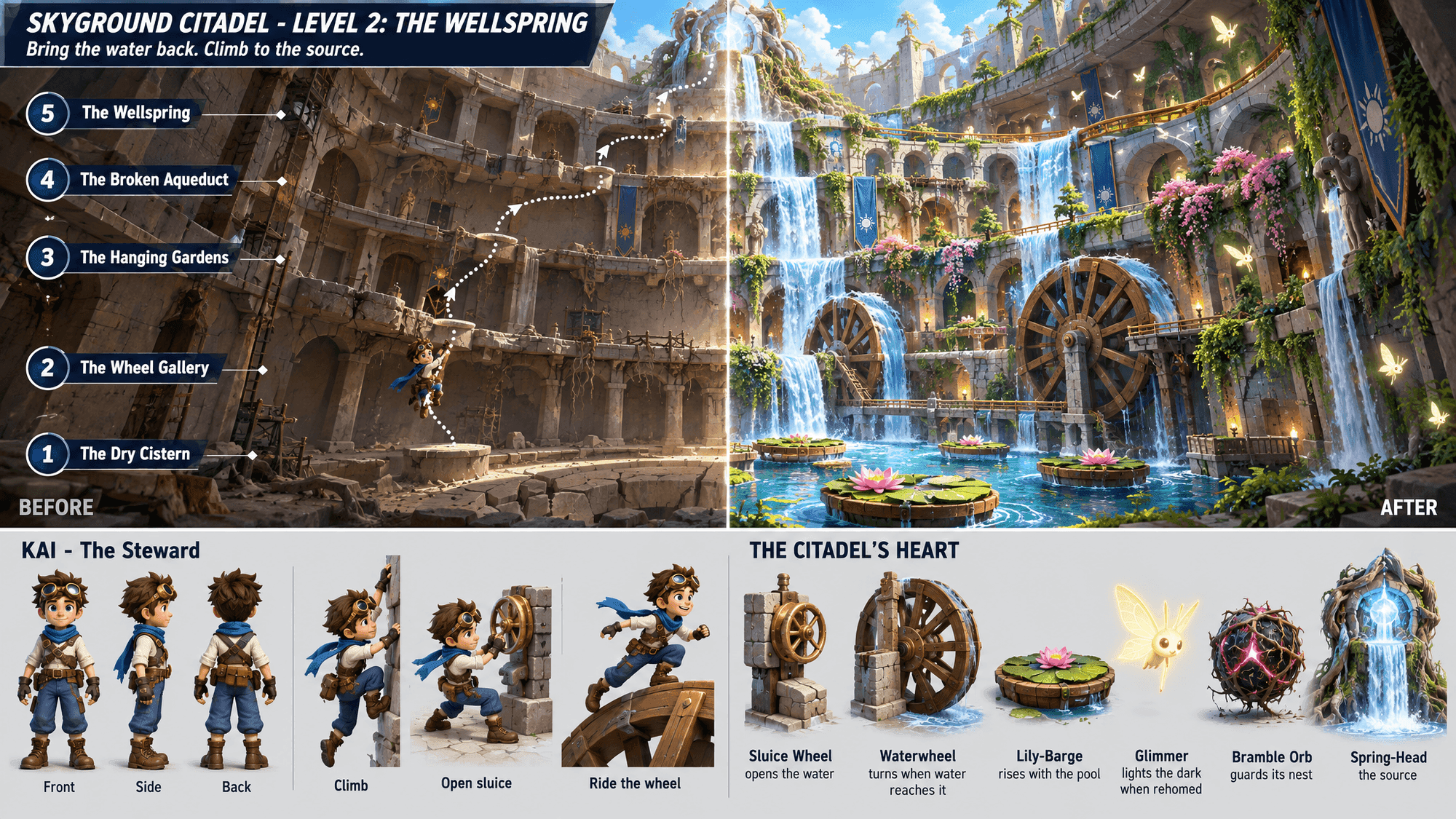
Every file went into one Numonic collection as a Draft: all three sheets (the rejected one too), the keyframes, every clip including the unused takes, and the cut. Each title says what the file is and whether it was used, so the reviewer and the maker are always looking at the same set.
Round One: What Did "No Continuity" Mean?
The first review came back as needs changes, with one comment:
It's cool but there's no continuity between the outside of it at the end of level one and the inside Kai is walking around. Also, there is no continuity in the music.
Both points were right, and the causes were concrete. Level 1 ends at dusk, on a fenced lawn before the citadel's gate. The dream opened straight inside, in midday sun, in a sandstone the outside never had. And each clip carried its own generated soundscape, so the cut was five unrelated soundtracks with no score.
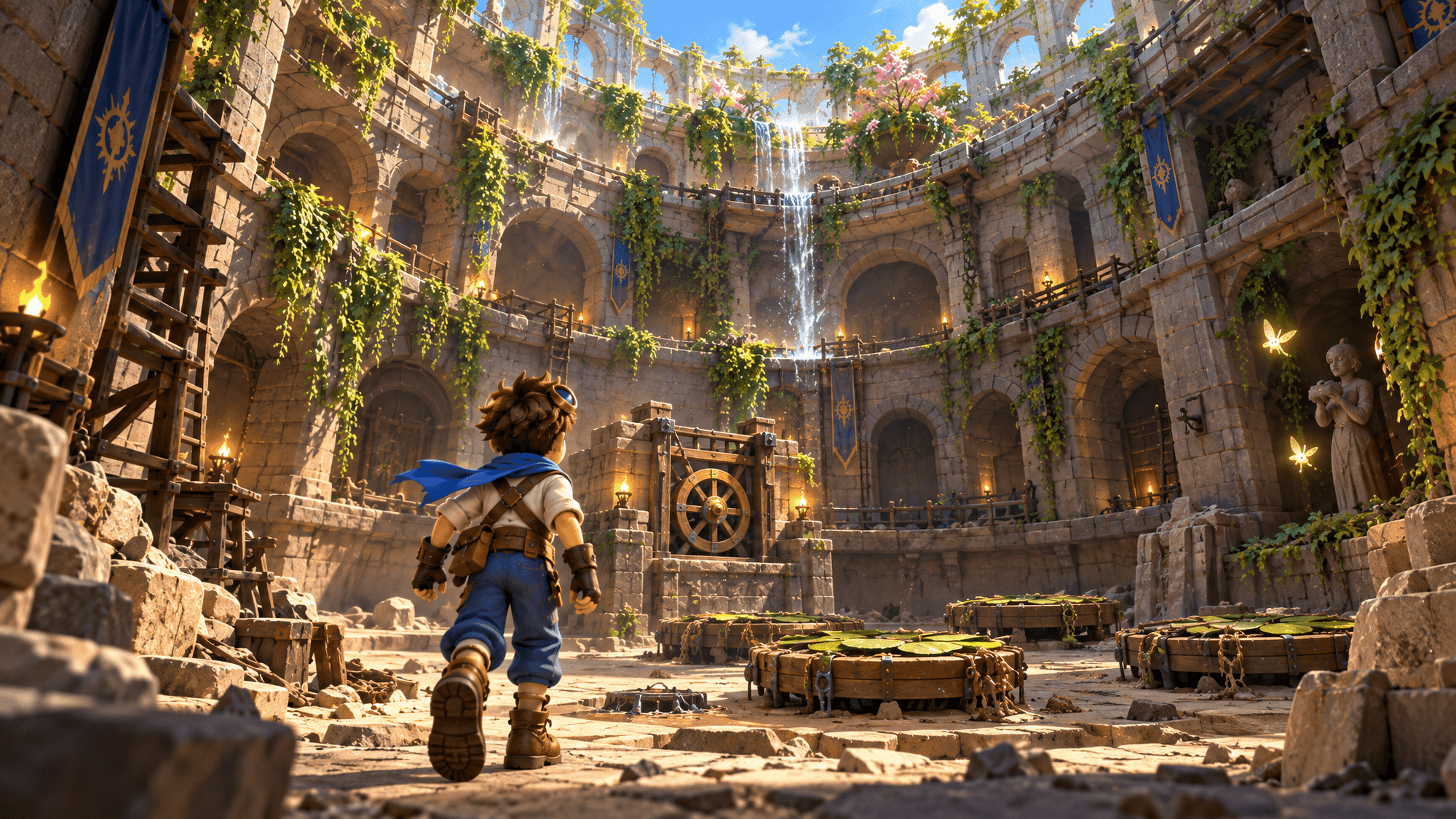
The fixes became rules for the level, not just for the video:
- Start where Level 1 ends. A new opening shot: the hero walks through the golden arch at dusk and into the well.
- Match the inside to the outside. The same stone, slate, and gold.
- Let light tell the story. Dusk and torchlight in the dry cistern, twilight at the waterwheels, first light in the gardens, dawn on the aqueduct, sunrise at the source. The restoration of the water now reads as the night ending.
- Use the game's own music. Level 1's score is synthesised in the browser from one tune in eight arrangements. We recorded it straight from the game's code, moving from the arrangement that plays at the end of Level 1 into a quieter one for the dark cistern, then into the finale as the water returns. The clips' own water and footstep sounds sit underneath it.
Version two was a 36 second cut. Version one stayed in the collection beside it, untouched.
Round Two: Why Was It the Wrong Castle?
The second review was one line:
That's a different castle from the one at the end of level 1.
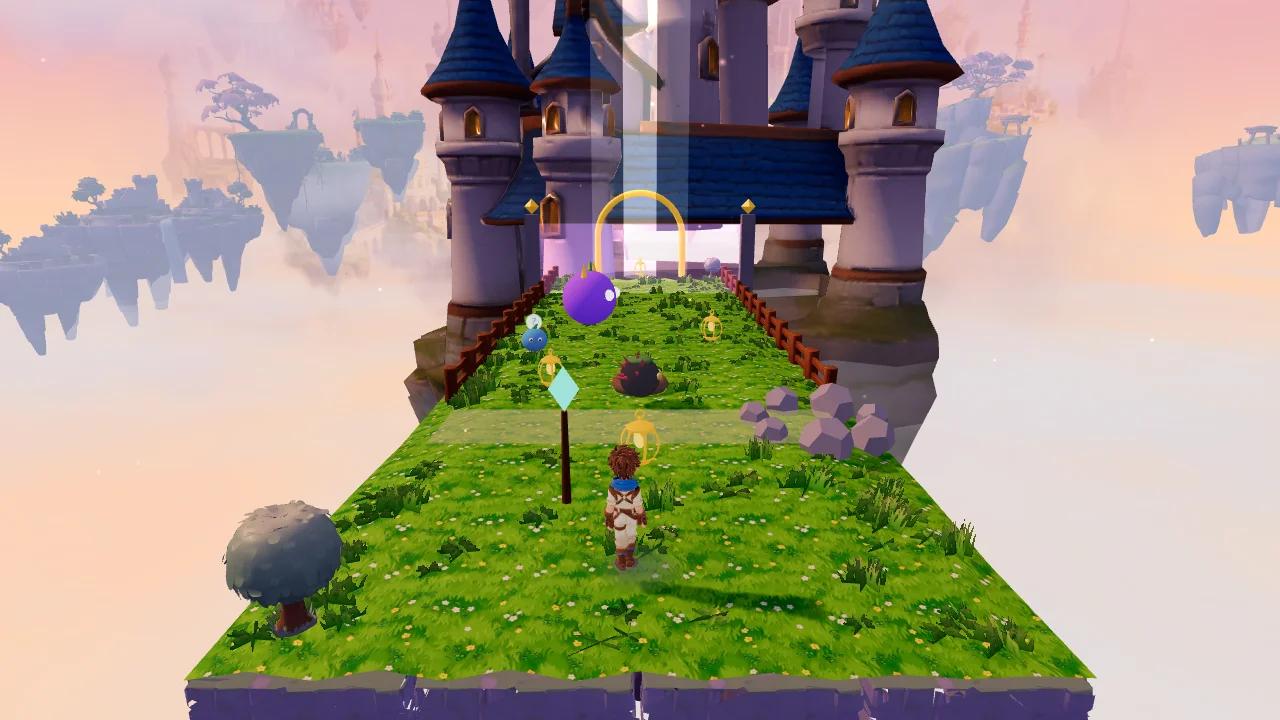
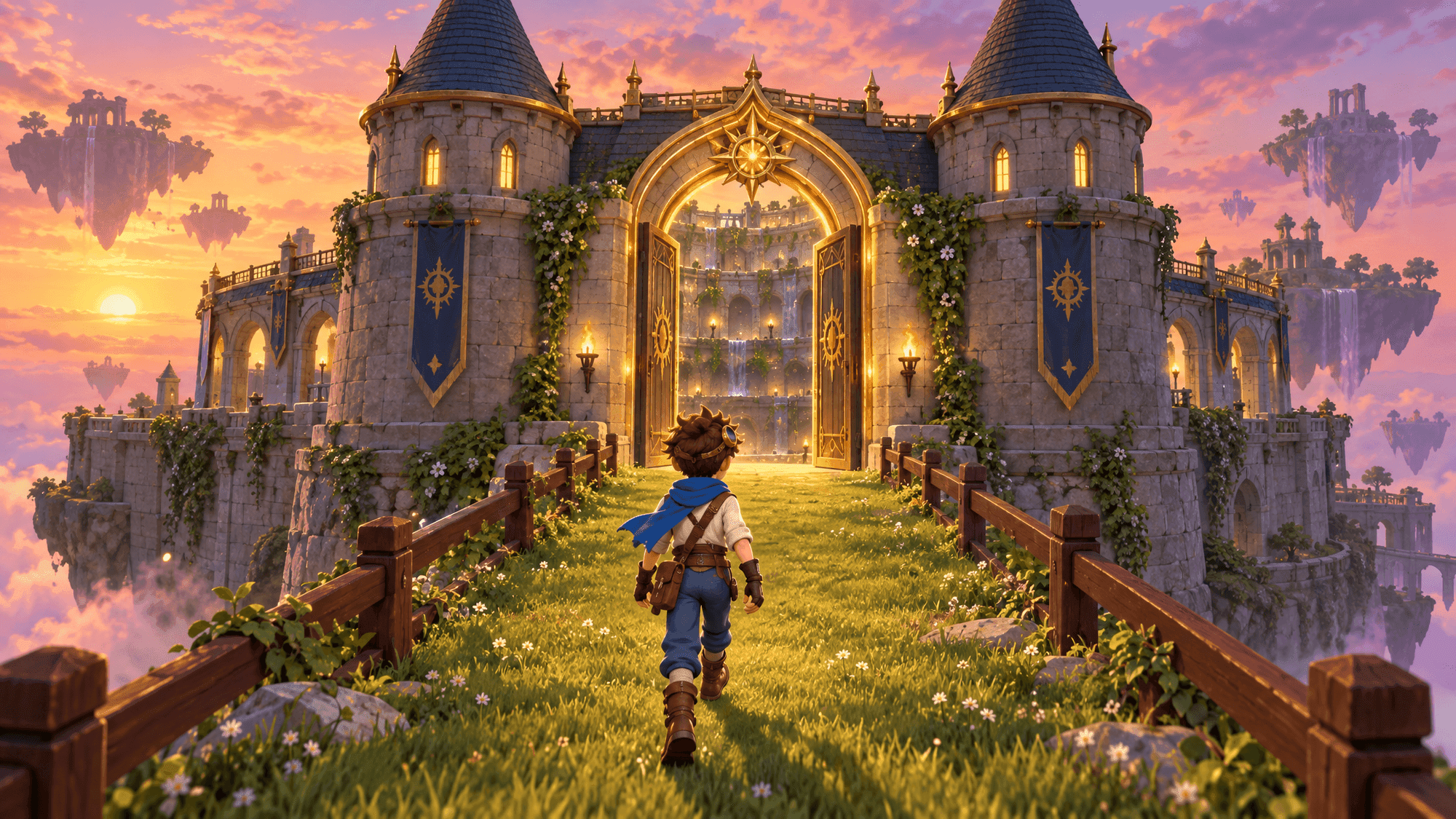
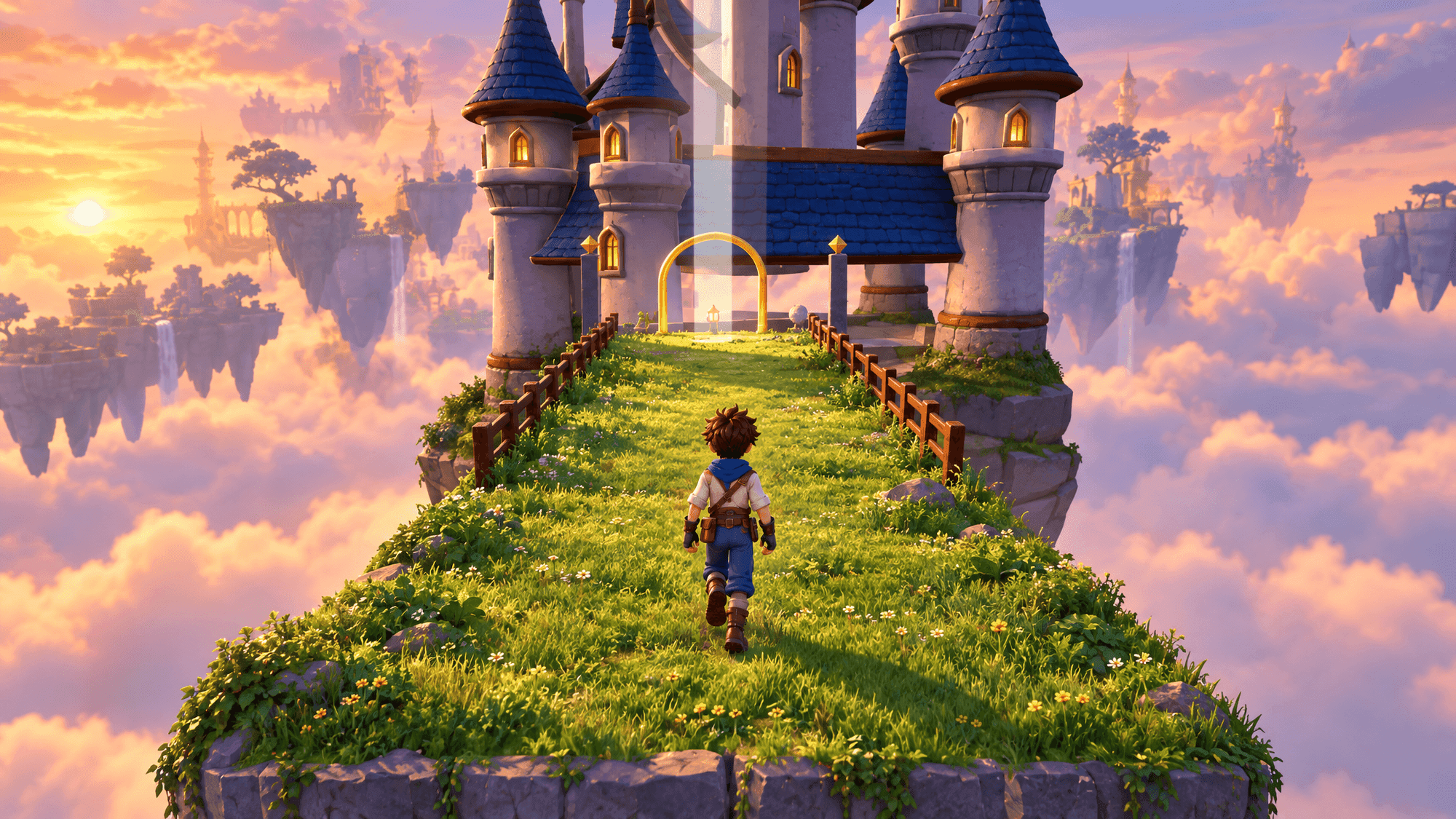
Again, right. To match Level 1's gate, we had worked from a close screenshot that showed only the gate wall and two nearby towers, and described the rest in words. The model filled in a squat gatehouse. The real citadel is a tall cluster of slender towers with dark blue spires, on its own floating rock. A description, however careful, gave the model room to invent.
Round Three: What Changed When We Used the Real Game?
We took clean captures of the real game, with the on-screen display hidden: one from the hero's position on the lawn, one wide shot of the whole citadel. Those captures became the reference images for the new opening, so the model redrew the castle that players actually reach rather than imagining one. The cut now opens on Level 1's lawn and castle, walks through the golden arch as its doors open, and goes down a lamp-lit passage into the well.
One more detail made the place legible. From inside the dry cistern, the same blue spires and central keep now crown the rim of the well above. A viewer who has just left the castle knows exactly where they are.
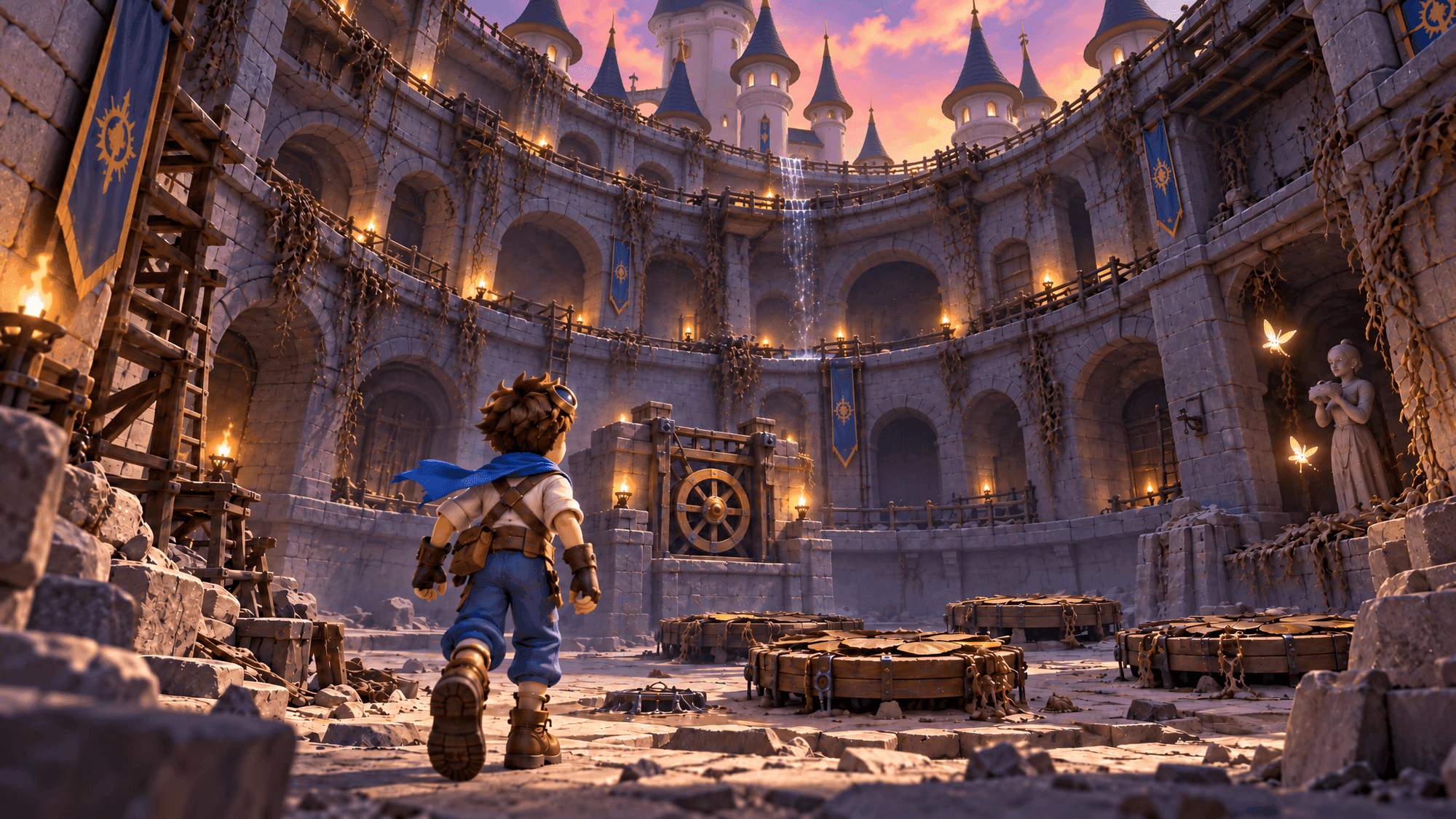
Version three, a 39 second cut, was approved with no further comments.
What Did Three Rounds Cost?
Very little, which is the point of making the dream first.
Three rounds, one comment each
| What the review said | What we made | Credits | |
|---|---|---|---|
| Round 1 | No continuity with Level 1, or in the music | 3 sheets, 5 keyframes, 10 clips | 128 |
| Round 2 | A different castle from Level 1 | 6 keyframes, 12 clips, the recorded score | 108 |
| Round 3 | Approved | 3 keyframes, 6 clips | 59 |
Each round started from one comment and took an evening to finish.
What Did Keeping Every Version Add?
Three things we would not want to do without:
- One place for the whole piece of work. All three versions, every keyframe, and every take sit in one collection. Nobody has to remember which file was the latest, or ask where the version with the old castle went.
- Nothing is final until a person says so. Every file stays a Draft until someone marks it approved. Status means a decision, not a filename ending in "final."
- Nothing thrown away. Rejected sheets and unused takes are still there, with titles saying they were not used. When the level is built, the approved video is the target, and the path to it is there for anyone who asks why it looks the way it does. A curated part of it is public in the walk-through collection.
Key Takeaways
- Make the dream before you build. A reference sheet, a keyframe per act, and a short video give the build a target for about the cost of a coffee.
- Continuity is place, time, and sound. Start where the last scene ended, carry the light forward, and keep one score across the cut.
- Generate from the real thing, not a description of it. Captures of the actual game fixed in one round what a careful description got wrong.
- Show a landmark from the new place. Seeing the castle's spires from inside the well tells viewers where they are.
- Keep every version together. Short comments are enough when everyone can see each version side by side.