Most teams adopt AI the same way: take the process they already have and add a model to one step of it. The output arrives faster. Then it piles up, because every piece of it still has to be read, checked, and fixed by the same people as before.
The pattern is easy to spot once you look for it. A writing team adds an assistant and spends its time editing drafts. An engineering team adds a coding agent and spends its time reviewing pull requests. A design team adds image generation and spends its time sorting through hundreds of near-misses. The model made one step faster and moved the bottleneck to checking.
That is what happens when you bolt AI onto a process built for people. The alternative is to ask what each part of the process is for, and rebuild it around what has become cheap (producing, rewriting, throwing away) and what has become scarce (verification and human judgment).
Where does the work pile up?
- shipped
- 19
- waiting for a person
- 101
- of output needs a person
- 100%
Illustrative model, not data: the AI produces six items a second and a person can handle one, over 20 seconds.
If This Sounds Like Software Engineering, It Is
Software teams learned this lesson slowly, over two decades. Manual testing gave way to automated test suites and continuous integration. Style guides gave way to formatters and linters that refuse code that breaks the rules. Code review stayed, but it stopped being the only safety net. None of that was about AI. It was about volume: once teams shipped many times a day, people checking everything by hand could not keep up.
AI brings the same pressure to every kind of work at once, and faster. Marketing copy, design assets, research summaries, contracts, and support answers now arrive at a volume that human review alone cannot absorb. Fields that never needed a test suite are about to need their equivalent. The practices are not new. What is new is that they pay off in far more places, and that skipping them hurts much sooner.
How We Work, and a Game That Shows It
This is how we build at Numonic. AI agents do much of the work, and most of our process exists to check that work without a person reading all of it. The clearest standalone example of that way of working is a video game.
Skyground Citadel is a small 3D platform game that started as a single AI-generated video of a boy running across floating islands. You play Kai, steward of the citadel grounds: carry lost creatures back to where they live, wake the dry springs, and make your way to the citadel gate. Over a couple of weeks, an AI agent (Claude) turned it into something you can play in your browser. It wrote the code from a design document, and a person steered it with a few short playtests. The 3D models and textures were generated from frames of the source video. We have open-sourced the code under the MIT license. How the game itself was designed, playtest by playtest, has its own write-up: How We Turned an AI Video Into a Playable Game Level.
The source: an AI-generated video
The result: a game you can play
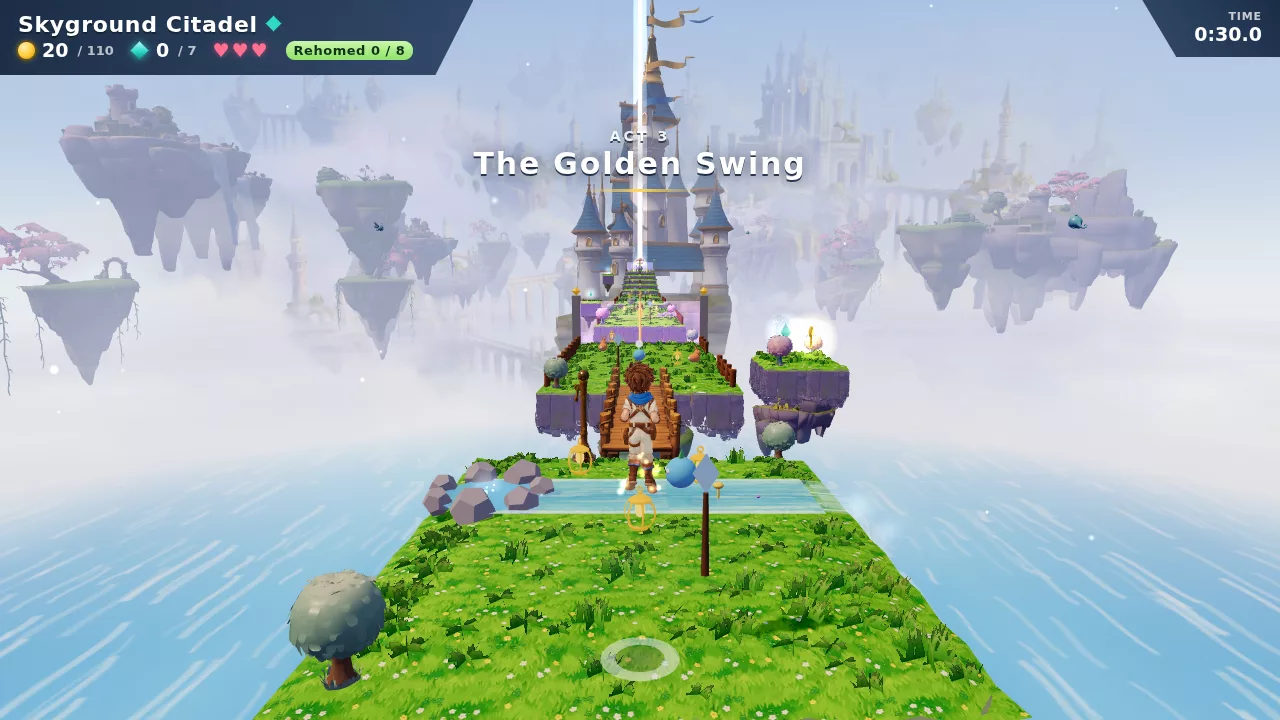
What makes it interesting is less the game than how differently it is put together. A typical game is built in an engine such as Unity or Unreal, with levels assembled in its visual editor and art made by artists. Studios automate testing to very different degrees, but much of the quality work still comes from people playing. Skyground Citadel uses none of that. It is plain code with three.js for drawing and no build step. The level is a data file. All the rules of the game live in one file of pure, deterministic functions with no browser in it, so a whole playthrough can be simulated in under a second. Well over a hundred automated tests check those rules, and a scripted player proves the level can be finished by many different routes.
| Aspect | A typical engine-built game | Skyground Citadel | Principle |
|---|---|---|---|
| Starting point | A design document and concept art | One AI-generated video | |
| Who builds it | A team: designers, programmers, artists, testers | One AI agent, working from a design document | 7 |
| Human time | The whole team, for the whole project | A few short playtests | 5 |
| Where the game lives | Scenes and scripts edited by hand in a visual editor | Plain code and one data file the agent edits directly | 7 |
| How a change is checked | Some automated tests; largely people playing | In code, in under a second: tests and a scripted player | 1 · 4 |
| Before anyone else plays | Playtesting and QA by people | Five AI players that never saw the code, against criteria written first | 2 · 3 |
| Art | Artists and animators | Generated from frames of the source video, each model filed with its workflow | 9 |
Before anyone outside saw it, five independent AI players that had never seen the code played it through a text interface, against pass criteria written down in advance. All five reached the citadel gate.
None of these choices was made because it is how games are usually built. They were made because an AI agent was doing the building. With each lesson below, we say where we apply it beyond the game.
The Core: Verification Is the Constraint
When producing work costs almost nothing, the scarce thing is knowing whether it is right. Five practices follow from that.
1Make “Done” Something a Machine Can Check
The game moved correctness into code that can be tested: its rules are pure functions, each rule has tests, and a scripted player proves the level can be finished. When the agent changes the vine-swinging physics, nobody needs to look to know it still works: the tests say whether the rope still behaves and whether every route still reaches the gate.
Ask of every task: what can say “done” without a person reading all of it? A test, a schema, a validator, a measurable target. Where nothing can (taste, tone, fun), make that a small, explicit checkpoint for a person, not a general “someone reviews it at the end.”
Beyond the game: every change to our product runs through automated checks before it merges (about forty in all, picked by what the change touches), on the developer’s machine and again in the pipeline, so the person reviewing it starts from “it works” instead of having to establish it.
2Write the Criteria Down Before You Start
The game’s pass criteria were written before the first AI player touched it: how many of the five runs had to finish, how many attempts each section could take, and no point where a player could get stuck. Writing them first stops the goalposts from moving to wherever the result happened to land.
Beyond the game: our own work items list their acceptance criteria up front, split into what must be true when the change is merged and what must be observed working in production. Merged is not the same as verified, so the second list is ticked by the person who asked for the work, after seeing it live. We added that split after an issue closed itself on the first of three deliveries with none of its criteria checked.
3Keep the Checker Independent of the Maker
The five AI players had never seen the code. That matters, because an agent that writes both the code and the tests shares its own blind spots, and its tests tend to confirm what it already believes.
Beyond the game: when we run several coding agents in parallel, each change gets a separate verifier agent that re-derives the evidence (the diff, the test results, the status of each criterion) instead of trusting the implementer’s own report. The principle is old (authors don’t approve their own work), but agents make it cheap to apply everywhere.
4Separate What Can Be Checked From What Needs Judgment
The game splits cleanly in two. One part is exact rules, fully tested. The other is look and feel, judged by a human who plays it. That split is why the agent could work quickly without breaking things.
How to read it: hexagons are machine checks, coral circles are human judgment, boxes are work, and dashed lines go back.
Most business processes blend the two, which is why they resist automation. A sales email mixes facts (prices, dates, product claims) that can be checked against data with tone that needs a person. A brand asset mixes specifications (dimensions, color values, required disclosures) with creative quality. Pull the checkable part out, let AI handle it freely, and route only the judgment part to people.
Beyond the game: this post went through the same split. Automated checks scanned it for phrases we avoid and for anything that would disclose how our product is built. A separate AI reviewer, and then a person, read it for whether the argument holds.
5Spend Human Attention Only Where It Matters
When output is cheap, the expensive resource is a person’s attention. Skyground Citadel needed little of it: a few short playtests, spent on decisions only a human could make, such as whether a jump felt fair, whether a character looked right, and which direction the next version should take. When a generated model came out wrong, it was thrown away and generated again, not repaired by hand.
Beyond the game: we batch the rest. When several agents work in parallel, one person approves their finished work together rather than being interrupted by each in turn, and questions are asked once at the start instead of trickling in. Our coding agents’ work passes automated checks and an AI review before a person sees it; in three weeks, 54 of 57 issues they took from our backlog ended in a merged change (Inside Our AI Software Factory). If your people spend their time reading every output line by line, the process is still built for human throughput.
What Makes It Work
Four enablers make those practices possible. They matter, though some will age faster than the core.
6Enforce Standards With Gates, Not Documents
Written standards only half-work even for people, which is why software teams adopted linters. For agents they barely work at all: an agent follows what its environment allows, not what a guide recommends.
We measured this in our own codebase. Over one month, agents ended about one turn in eleven by offering to do more and then waiting for a reply, which added up to 162 hours of waiting. Written guidance against exactly that habit was already in place, and it made no measurable difference. One of our own checks once repeated the mistake in code: it printed a warning when an agent started a command heavy enough to exhaust the machine’s memory, and it turned out the agent never saw the warning. Changing it to block the command is what worked.
If a rule matters, encode it where it cannot be skipped: a check before a commit, a validation on upload, an allow-list on a tool. Writing the rule down for the AI to “remember” is bolting on. Building it into the path the work has to take is redesigning.
Writing the rule down for the AI to remember is bolting on. Building it into the path the work has to take is redesigning.
7Put the Real Work Where the Agent Can Reach It
A game engine’s editor is designed for eyes and a mouse. Skyground Citadel is code and data from end to end: rules, levels, and even the music, which is synthesized in code rather than stored as audio files. An agent can read all of it, change any of it, and compare versions line by line.
The general rule is that the agent should work on the real thing, not a copy of it: configuration as code, documentation next to the work, and decisions recorded where the next person (or agent) will find them. When the real work sits where the agent cannot reach it, you end up feeding it screenshots and summaries.
Beyond the game: our architecture decisions, more than two hundred of them, live in the same repository as the code, so an agent changing the code can read why it is the way it is.
Tool choice follows from this. The game uses plain JavaScript and three.js, a library models have seen countless times, with no build step to go wrong. Today that favors familiar, simple tools an agent can change reliably. That advice reflects current models and will shift as they improve; the underlying point, that the agent works directly on the real thing, will not.
8Design Interfaces for Agents, Not Just People
When agents become users of your systems, the interface has to fit them. We ran into a small example in Numonic itself: agents repeating long signed download links in their replies would corrupt them, so we now give agents short-lived links short enough to pass along intact, and error messages that tell the agent exactly what to do next.
Two more habits follow from how agents behave. Give each agent its own narrowly scoped credential, so you can see and limit what it does. And because agents copy and repeat what they see, keep long-lived credentials such as API keys in request headers, never in URLs that end up in logs or replies. When a link has to carry access, like the download links above, make it expire within minutes.
9Keep a Record of How Everything Was Made
When an agent produces most of the work, “who decided this, and why?” stops having an obvious answer. A record of how each thing was made is what lets you answer for it, and what lets you redo one part without redoing everything. Every model in Skyground Citadel was filed with the workflow that produced it, and every version, playtest, and decision was recorded as it happened. When the first version of the hero came out with a cape that tangled through his legs, that one model was regenerated from its recorded workflow with a changed instruction, and nothing else had to move.
The same record is what let us open-source the project with a straight answer to “where did this come from?”
Beyond the game: each of our commits records the problem it solves, the approach taken, and the time it took, so the reasoning survives after the agent session that produced it has ended.
The Checks Are Now the Work
Redesigning does not remove work; it moves it. Someone has to write the criteria, build the checks, and keep them honest as the work changes. For the game that meant well over a hundred tests, a scripted player, and a text interface so AI players could play at all. Agents can build much of this cheaply, but checks fail in their own ways:
- A check written by the same agent as the work shares its blind spots (principle 3).
- A check that quietly stops running looks exactly like one that passes. Our own tooling reports every check as passed, failed, or skipped, because a skipped check is not a passing one.
- Checks drift. A criterion that was right for the first version can be too easy by the third, and nobody notices unless someone owns it.
Treat the checks as a product with an owner: reviewed, versioned, and re-examined when results look too good.
Where This Doesn’t Apply
The same project shows the limits, and they deserve as much attention as the method.
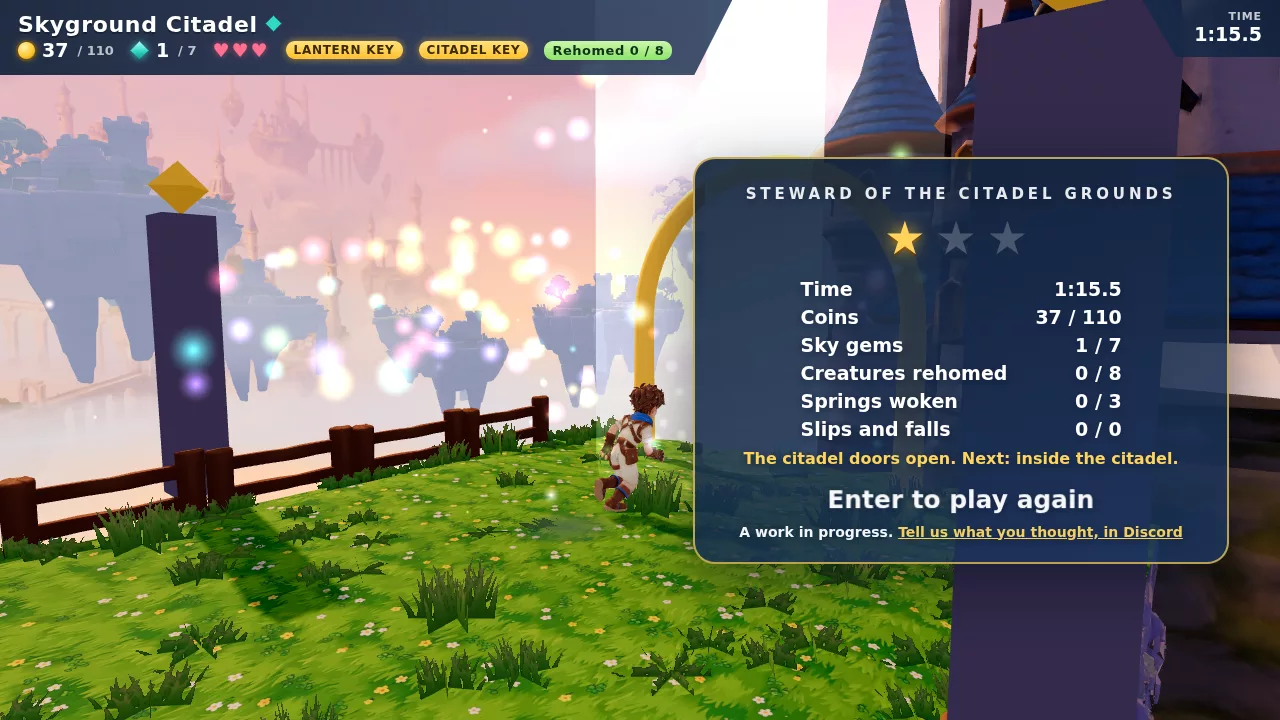
- When the check measures the wrong thing. The scripted player that proves the level can be finished reaches the gate without rehoming a single creature, which is the point of the game. Rehoming is just as easy to count as finishing; it simply was not in the criteria. A check can be perfectly automatic and still measure the wrong thing, and whatever the criteria leave out, an agent will skip (principle 2).
- When judgment is the product. The five AI players all reached the gate, and they found it easy. No counter can say whether the game is fun. For a game, a campaign, or a piece of writing, the checkable part may be small and most of the value sits in judgment no machine gives. Redesign still helps: pulling out the checkable slice (facts, specifications, required elements) leaves people more time for the part only they can do. But don’t expect the split to be clean.
- When you start from an existing process. Few teams get to design from scratch the way a new game can. Pick one checkable slice of one process, make it automatic, and grow from there.
- Easy to extend is not the same as easy to own. Code an agent finds simple to add to can grow into something no person wants to maintain. Structure still matters.
- Some standards exist for reasons that still hold. Security rules, review before release, and evidence before claiming something works all still apply. Redesign how they are enforced, never whether.
The One-Question Test
Picture the process if producing the work cost almost nothing, and ask: who would have to look to know the result is right?
If the answer is “a person, at the end, reading everything,” AI has been bolted on. If the answer is “a check, all the way through, with people at a few named points of judgment,” the process has been redesigned.
For a longer check, score one of your own processes against all nine principles.
The longer version: nine questions
Pick a process you already use AI in, and answer for how it works today.
- 1Something other than a person can say an output is done: a test, a schema, or a validator.
- 2The criteria for “good enough” are written down before the work starts.
- 3Whatever checks the work is independent of whoever (or whatever) produced it.
- 4The checkable part and the judgment part of the work are separated.
- 5People spend their time on judgment calls, not on reading every output.
- 6Your rules are enforced by checks in the workflow, not only written in a guide.
- 7The AI works directly on the real thing, not on screenshots or copies of it.
- 8Your systems give agents narrowly scoped access and machine-readable responses.
- 9You can tell how any output was made, and redo one part without redoing the rest.
Answer the questions to see where it sits.
Key Takeaways
- Adding AI to a human-shaped process moves the bottleneck from producing work to checking it.
- Software engineering learned this with test suites and continuous integration. AI brings the same lesson to every field at once.
- Make “done” machine-checkable, write the criteria first, and keep the checker independent of the maker.
- Spend human attention on judgment, and enforce standards with gates rather than documents.
- Treat the checks themselves as work with an owner.
- Where judgment is the product, pull out the checkable slice and keep people on the rest.